Comparative Constitutionalism in South Asia
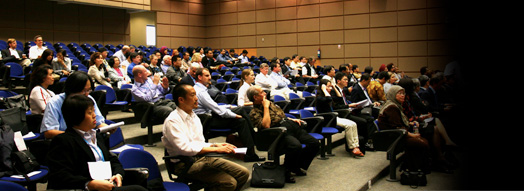
11-13 June, 2009 In November 2006, leading scholars of South Asian law gathered at the School of Oriental and Asian Studies in London to explore how constitutional and legal traditions in South Asia are similar, or intersect and influence each other. The event was co-organised by South Asia Studies, the Paul H. Nitze School of Advanced International Studies, Johns Hopkins University ("SAIS") and the School of Oriental and African Studies, London University. One of the purposes of this continuing project is to explicitly address the gap in the field of comparative constitutional law, where rich, sophisticated studies on jurisdictions outside of North America and Europe continue to be scarce. The symposium in Singapore, held in mid-July 2009, was conceived as a sequel to the London conference, and aimed at continuing and enriching the dialogue on South Asian law and constitutionalism. The symposium was co-organised by SAIS, the Faculty of Law, NUS and the Asian Law Institute (ASLI) which is based at NUS. The second phase of the project expanded its scope by involving judges and practitioners in addition to scholars and researchers. This phase also sought to consolidate understanding of emerging patterns in South Asian constitutionalism while exploring other aspects of legal and regulatory integration within the region.  The Singapore symposium featured presentations by the following participants: Sujit Choudhry, Faculty of Law, University of Toronto; Rohan Edrisinha, Director, Centre for Policy Alternatives, Colombo; Kamal Hossain, formerly the Minister for Law in Bangladesh, and Senior Advocate, Supreme Court of Bangladesh; Sara Hossain, former head of the South Asia Programme at INTERRIGHTS and practicing lawyer, High Court of Bangladesh; Anil Kalhan, Earl Macke School of Law, Drexel University; Jayanth Krishnan, Maurer School of Law, Indiana University; Martin Lau, School of Oriental and African Studies, London University; Justice S. Muralidhar, High Court of Delhi; Justice (retd.) Ruma Pal, formerly Justice on the Indian Supreme Court and Ford Foundation Chair on Human Rights, National University of Juridical Studies, Kolkata; R. Sudarshan, Legal Reform and Justice, UNDP Bangkok; Arun Thiruvengadam, Faculty of Law, NUS and Deepika Udagama, Faculty of Law, University of Colombo.  Issues discussed at the symposium included: the justification for, and viability of, a project on Comparative Constitutionalism in South Asia; the methodological and practical challenges of engaging in research on South Asian constitutionalism; the challenges posed by linguistic nationalism in South Asia for designing constitutional solutions; the possibilities of linkages between public interest organizations and lawyers across South Asia; the challenges posed by secularism in individual South Asian nations and the law’s response; and the manner in which judiciaries across the region have reacted to the tumultuous politics within individual jurisdictions while seeking to maintain institutional legitimacy.  The symposium witnessed a high degree of participation from NUS staff and students. Professors Michael Hor and Associate Professor Victor Ramraj acted as moderators for sessions. Professor Kumaralingam Amirthalingam opened the symposium in his capacity as Director ASLI and also served as a session moderator. The symposium was attended by Faculty members from the Institute of South Asia Studies, and the Department of South Asia Studies, and students and Faculty members from the Law Faculty. The format of the symposium was designed to enhance dialogue and conversation, and the robust discussion that took place following each individual paper was an indication both of how pressing the issues addressed are, as well as the need for conducting greater comparative research on them for the future. The Singapore symposium was co-organised by Professor Sunil Khilnani, Director, South Asia Studies, SAIS, Vikram Raghavan, and Assistant Professor Arun Thiruvengadam, Faculty of Law, NUS. They have reached an agreement with a leading academic publisher to publish an edited volume consisting of papers presented in the London and Singapore sessions sometime in 2010, and are currently engaged in editing the papers. The Singapore symposium was made possible because of generous research grants by the National University of Singapore and the Johns Hopkins University. |

|

 |
 |
 |
 |
 |
 |
Join us | Contact Us | Sitemap |
 |

ASLI organizes a variety of events for its members to foster closer interaction and create opportunities for collaboration in research and general academic enterprise. Be an active participant – contribute to ASLI’s events and reap the benefits. |
 Flagship Events